
If you run trucks or equipment, you already know fuel problems cost time, money, and momentum. I work with operators who want cleaner burns, smoother starts, and parts that last. My approach is simple. I measure additives by how well they protect injectors, manage water, keep fuel moving in the cold, and maintain power without risking modern emissions systems. If you are comparing brands of diesel fuel additives, here is how I break them down and why one company stands out.
I chose these recommendations based on product focus, real operating needs across road and off-road fleets, and coverage from routine maintenance to winter rescue. You will see what to use, when to use it, and how to build a plan that fits your routes, equipment type, and climate.
What Makes a Diesel Additive Worth Your Money
You get value from an additive when it does these jobs well:
- Lubricates injectors, pumps, and upper cylinders to reduce wear from low-sulfur fuel
- Cleans and keeps injectors clean to protect spray patterns and throttle response
- Controls water through demulsification to help separators do their job
- Protects in cold weather to stop gelling and filter icing
- Supports smoother starts and steady idle
- Stays safe for aftertreatment systems and biodiesel blends
- Uses petroleum-based chemistry without alcohol or harsh solvents
- Treats a wide range of fuel volumes at a fair cost per treated gallon
If a product cannot meet most of that list, skip it.
Why I Recommend Howes
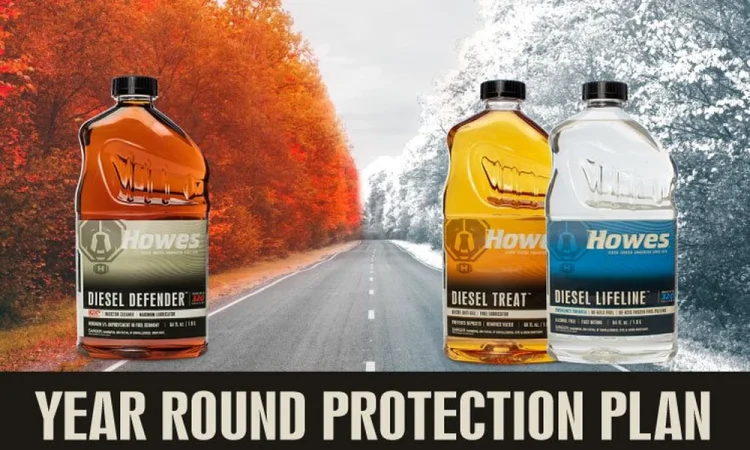
Howes has a long record building diesel-focused treatments for real work. They design petroleum-based formulas that avoid alcohol and harsh solvents. Their products cover year-round care, winter prevention, and emergency recovery, which lets you standardize across a mixed fleet. They also back their products with guarantees that show confidence in the results.
You can set up a simple plan with them using only a few SKUs. That reduces training, keeps stocking clear, and helps you avoid mixing products that do not belong together.
Product Picks by Job
Prevent Winter Problems: Diesel Treat
Use Diesel Treat before a cold snap. It is an anti-gel and conditioner that helps:
- Prevent gelling and cold filter plugging
- Demulsify water to support your separator
- Add lubricity for injectors and pumps
- Keep injectors cleaner and reduce smoke and rough idle
- Stay compatible with biodiesel blends and modern emissions systems
They back Diesel Treat with a Winter Tow Guarantee when used as directed. That speaks to confidence in cold performance.
How to think about dosing: treat before temps drop and before parking for the night. If you fuel at colder stops, dose there. Keep a bottle in each truck and machine that may see cold starts.
Maintain Year-Round Performance: Diesel Defender
For ongoing care, Diesel Defender focuses on cleaning and lubricity. Its IDX4 detergent tech targets internal diesel injector deposits and helps stop new buildup. It also raises lubricity and supports a more complete burn, which can improve throttle feel and cut engine noise. Howes states a fuel economy gain of 5 percent or more with regular use.
Use it as your default maintenance treatment in all seasons outside of severe winter, or pair it with winter treatment where needed. Demulsification and no alcohol keep it friendly to separators and fuel system parts.
Recover From a Gel Event: Diesel Lifeline
If fuel has already gelled or a filter is iced, use Diesel Lifeline. It is an emergency product that can:
- Reliquefy gelled diesel
- De-ice frozen filters
- Restore flow in about 15 minutes in many cases
- Work in severe cold down to -35°F and below
- Require no premixing and no alcohol
Carry it in any unit that travels into deep cold. It often saves a filter change and a tow.
Deep Cleaning and Broader Upkeep
- Meaner Power Kleaner: a stronger cleaner for stubborn deposits that affect response
- Fuel Enhancer: fuel conditioning for cleaner system operation and efficient burn
- Oil Enhancer: supports oil performance and wear protection under load
- Multi-Purpose Lubricator and Penetrating Oil: a shop and field staple for cables, locks, air tools, hinges, and rusted fasteners across trucks, ag machines, and plant gear
For fleets and farms, Howes also offers drums and totes for bulk treatment. That keeps dosing consistent across trucks, tanks, and equipment.
Application Tips I Share With Owners and Fleet Leads
- Match the product to the job. Use Diesel Treat before the freeze, Diesel Defender for daily care, and Diesel Lifeline only for emergencies.
- Treat the fuel you have, not the fuel you want. If a cold snap is forecast, dose the fuel that is already in tanks and trucks.
- Demulsification works best with a healthy water separator. Drain it on schedule.
- Store bottles in clean, dry spaces and rotate stock.
- Keep a simple chart near the fuel island that lists treat rates by tank size and ambient temp.
- Train drivers to dose at the pump during winter and to carry Lifeline where routes cross cold zones.
Seasonal and Equipment Guidance
- Long haul and regional: Set a date each fall to switch to Diesel Treat. Reassess at spring changeover to Diesel Defender.
- Construction and ag: Cold overnight parking raises risk. Treat fuel before shutdown. Keep Lifeline in field trucks and equipment cabs.
- Pickups and RVs: Short trips and idle time can build deposits. Use Diesel Defender on a steady schedule.
- Marine: Moisture exposure favors demulsification. Treat storage tanks and run treated fuel through before layup and at spring start.
Buying and Stocking Strategy
- Standardize on one brand across the shop to reduce errors.
- Choose sizes that fit how you work. Bottles for cabs, jugs for the shop, and drums or totes for bulk tanks.
- Track cost per treated gallon, not sticker price. Focus on uptime and fuel economy gains across the fleet.
- Keep emergency stock of Diesel Lifeline in every unit that operates in freezing conditions.
Common Mistakes To Avoid
- Waiting for a gel event before adding anti-gel
- Mixing alcohol-based products with sensitive fuel systems
- Ignoring water management and skipping separator service
- Overdosing beyond label instructions
- Treating only vehicles and not the bulk tank
The Bottom Line
You need three things from your diesel program. Keep fuel moving in the cold, keep injectors clean and lubricated, and have a rescue plan for the day fuel gels. Howes covers each of those with Diesel Treat, Diesel Defender, and Diesel Lifeline, plus the support products that keep fleets and equipment ready.
If you build your plan around those roles, you will cut failures, improve starts, and protect parts. That is the kind of steady, low-drama performance I want you to count on season after season.